I keep coming back to one image from Tennessee’s frontier history. A group of ordinary men, farmers and hunters and fathers, gathering at Sycamore Shoals in the fall of 1780. They had no orders. No pay. No uniforms.
They were going to war anyway.
These were the Overmountain Men. And the march they started that autumn changed the course of the American Revolution. Most people have never heard of them. Like so much of this region’s history, their story deserves a lot more attention than it gets.
Who They Were
The Overmountain Men were frontier settlers who lived west of the Appalachian Mountains, in what is now East Tennessee and the western edges of the Carolinas and Virginia. The name came from their geography. They lived over the mountains, beyond the reach of the established colonies, in rugged country they had carved out for themselves.
They were not soldiers in any formal sense. They were farmers who knew how to shoot because shooting put food on the table and protected their families. They supplied their own rifles, their own horses, and their own food. When they decided to fight, they did it on their own terms and at their own expense.
That independence is the whole story, really. These were people who had already chosen a hard, self-reliant life on the frontier. When the Revolution reached their doorstep, they responded the way they responded to everything. They handled it themselves.
The Threat That Set Them Moving
In the fall of 1780, a British officer named Major Patrick Ferguson sent the Overmountain settlements a warning. Lay down your arms, he told them, or he would march his army over the mountains, hang their leaders, and lay waste to their country.
It was meant to frighten them into submission. It did the opposite.
The threat lit a fire under the frontier. Word spread from settlement to settlement. Instead of backing down, the Overmountain Men decided to go find Ferguson before he could come find them. They would not wait to be attacked in their own homes. They would carry the fight to him.
That decision tells you everything about the character of these people.
The Gathering at Sycamore Shoals
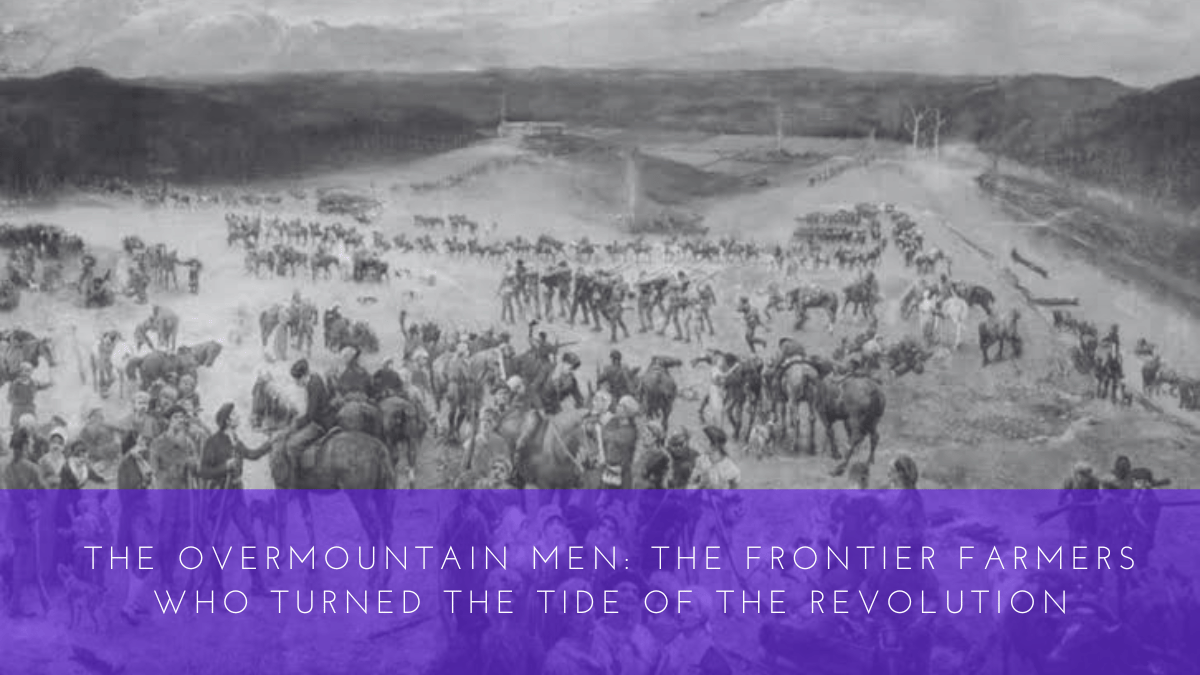
They gathered at Sycamore Shoals, near present-day Elizabethton, Tennessee, in late September 1780. Around a thousand men assembled, drawn from the scattered settlements across the frontier. Before they left, a minister named Samuel Doak preached to them and sent them off with a blessing.
Then they marched. Up and over the mountains, through difficult terrain and cold weather, covering rough ground that would challenge anyone. They picked up more men along the way as the militia from other areas joined them. By the time they closed in on Ferguson, their numbers had grown.
Among the leaders was John Sevier, who would go on to become a central figure in this region’s history. I have written about Sevier’s remarkable life as Nolichucky Jack and Tennessee’s first governor, and Kings Mountain was one of the defining moments of his early career. He was one of several frontier commanders who held this loose army together through the march.
The Battle of Kings Mountain
They caught Ferguson on October 7, 1780, at Kings Mountain, just across the line in South Carolina. Ferguson had taken a position on top of the hill, believing the high ground gave him the advantage.
He was wrong.
The Overmountain Men were exactly the wrong enemy to face on wooded, hilly terrain. They were expert marksmen who knew how to fight from cover, moving up the slopes from tree to tree, picking their targets. The battle lasted about an hour. Ferguson was killed. His force was defeated completely.
The victory broke British momentum in the southern campaign. Thomas Jefferson later called Kings Mountain the turn of the tide of success. It opened the path that led, eventually, to the British surrender at Yorktown.
Ordinary frontier farmers did that. Men who supplied their own rifles and answered to no one.
Why This Story Matters
The Overmountain Men went home after Kings Mountain. Most of them returned to their farms and their families and their ordinary lives. They did not become famous. They did not seek reward. They had a job to do, they did it, and they went back to work.
That pattern shows up again and again in this region’s history. The settlers who formed the State of Franklin a few years later carried the same independent spirit. The same willingness to handle things themselves when no one else would. The frontier shaped a particular kind of person, and that person shaped the history that followed.
Tennessee history is full of these moments where ordinary people from overlooked places stepped into events that reached far beyond their own borders. I have written before about Tennessee’s unexpected connections to national events, and the Overmountain Men belong near the top of that list. A group of frontier farmers helped turn the tide of the Revolution, then quietly went home.
Remembering the March
Today the Overmountain Victory National Historic Trail traces the route those men took from the mountains to Kings Mountain. You can walk parts of the path they walked. You can stand at Sycamore Shoals where they gathered.
I think there is something worth holding onto in their story. Not the battle itself so much as the choice to make the march. These were people who could have stayed home, kept their heads down, and hoped the war would pass them by. They chose the harder thing instead. They organized themselves, supplied themselves, and went to meet the threat head on.
That is a frontier value worth remembering. And it started right here, with a gathering at Sycamore Shoals and a long march over the mountains.
More Tennesseans should know their names.