Before Nashville was a city, it was a gamble.
In the winter of 1779 and 1780, a group of settlers left the safety of the eastern settlements and pushed into the middle of what would become Tennessee. They were headed for a spot on the Cumberland River with no fort, no neighbors, and no guarantee they would survive the first year. Most people know Nashville as Music City. Far fewer know it began as one of the boldest and most dangerous settlement ventures on the American frontier.
This is the story of the people who founded it, and why their gamble matters.
Two Groups, Two Impossible Journeys
The founding of the Cumberland settlements came down to two separate expeditions, led by two men, James Robertson and John Donelson.
Robertson led the overland party. He took a group of men on foot and horseback across hundreds of miles of rough country in the dead of winter, driving livestock ahead of them, to reach the Cumberland River bluffs. They arrived around Christmas of 1779 and crossed the frozen river to the site where Nashville stands today.
Donelson led the water party, and his journey may be one of the most harrowing in the whole story of American settlement. He guided a flotilla of flatboats and canoes carrying women, children, and families down the Holston River, down the Tennessee, up the Ohio, and finally up the Cumberland. The voyage covered roughly a thousand miles. It took four months. Families died along the way from cold, from illness, and from attacks. The journal Donelson kept of that voyage survives, and it is one of the most gripping frontier documents we have.
That two groups attempted this at all, splitting the risk between an overland march and a river voyage, tells you how uncertain the whole venture was. They were not sure either route would work. So they tried both.
The Cumberland Compact
What the settlers did next is the part I find most remarkable, and it connects directly to a thread that runs all through early Tennessee history.
They were far beyond the reach of any established government. No court, no sheriff, no colonial authority could help them or govern them. So in May of 1780, they wrote their own government. The Cumberland Compact was a written agreement, signed by more than 250 settlers, that set up a system of governance for the new settlements. It created a court, provided for elected representatives from each station, and even included a provision allowing those representatives to be recalled by the people who elected them.
Think about what that means. Frontier settlers, surrounded by danger and cut off from any authority, sat down and drafted a document to govern themselves by consent. This was the same frontier instinct that later produced the short-lived State of Franklin, where settlers in East Tennessee tried to form their own state when they felt abandoned by the government back east. The impulse was identical. When no one was coming to govern them, these people governed themselves.
The Battle of the Bluffs
Survival was never assured. The most dangerous moment came in April of 1781, at what became known as the Battle of the Bluffs.
A large force attacked Fort Nashborough, the settlers’ main stockade. In the fighting that followed, the defenders were nearly overrun. According to the accounts passed down, the settlement was saved in part by a woman named Charlotte Robertson, wife of James Robertson, who is credited with releasing the station’s dogs to help drive back the attackers and give the men a chance to reach the safety of the fort. The details have been retold many times over the years, but the core of it stands. The settlement came very close to being wiped out in its first full year, and it survived by the narrowest of margins.
Many of the early Cumberland stations did not make it. Families abandoned their claims or were killed. That Nashville survived at all was not inevitable. It was the result of stubborn people who refused to leave ground they had nearly died to reach.
The Frontier Character That Built a State
The people who founded the Cumberland settlements shared something with the other early Tennesseans I have written about. The same self-reliance. The same willingness to handle things themselves when no one else would.
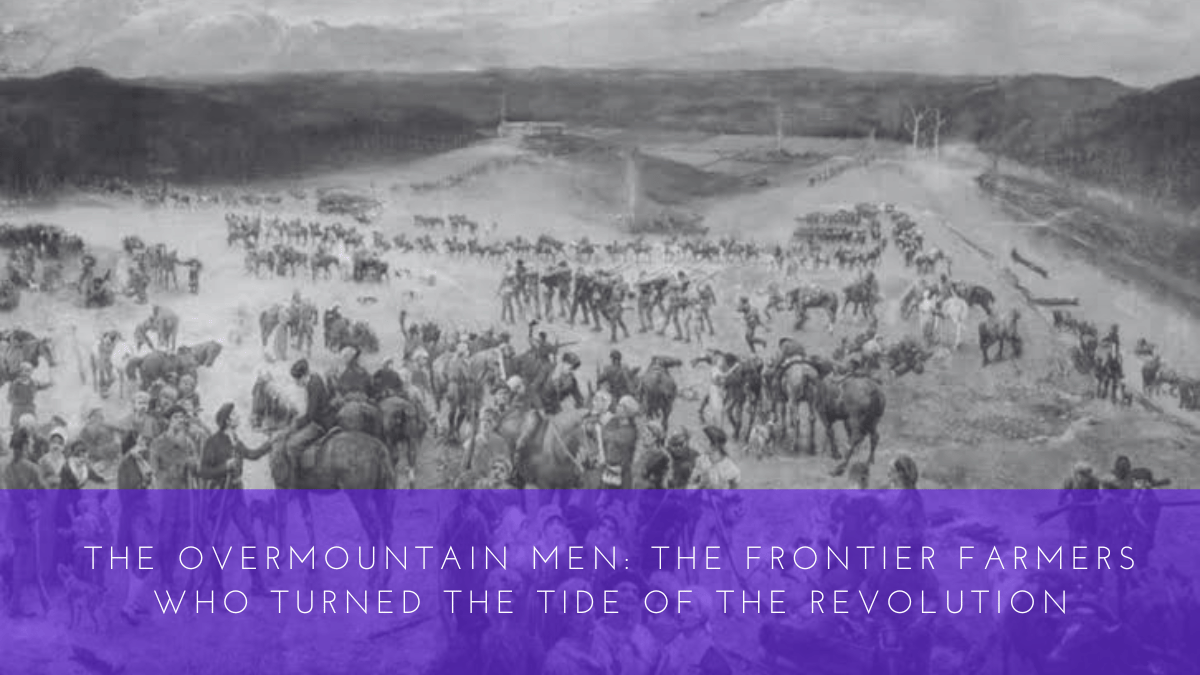
James Robertson is often called the Father of Tennessee, and the men who led on the Cumberland moved in the same world as figures like John Sevier, Tennessee’s first governor and a leader of the frontier militia. These were people who had already chosen the hardest possible version of life, and when the American cause and their own survival demanded it, they organized and acted. The same men and communities that produced the Overmountain Men who marched to Kings Mountain were part of this larger frontier story of ordinary people doing extraordinary things.
Tennessee did not become a state until 1796. But the character of the state was set years earlier, on frozen rivers and behind stockade walls, by people who built something out of nothing because they decided the risk was worth it.
Why Nashville’s Origin Story Deserves Better
We tend to remember cities for what they became rather than how they began. Nashville became a capital, a center of music, a place millions of people visit. All of that grew from a settlement that nearly failed in its first winter.
The Cumberland founders belong in the same conversation as the other overlooked chapters of Tennessee history I keep returning to. Their story connects to the larger pattern of Tennessee shaping national events from the very beginning, long before the state officially existed. These were not minor figures in a minor place. They were founders, and the thing they founded outlasted every danger they faced.
The next time you hear Nashville called Music City, it is worth remembering the winter it almost did not survive, and the people who made sure it did.
More Tennesseans should know their names.